
Pacing a Nomadic Professor course for a full school year depends on the specific course you're using, the number of Sessions it contains, and your student’s weekly workload. While every school, co-op, and family will run their schedule differently, the guidelines below will help you build an effective plan based on the structure of each NP course
How NP Courses Are Structured
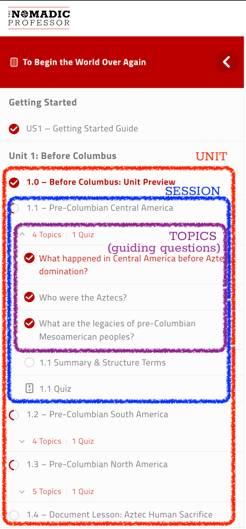
Each NP history course is divided into units of 4-5 sessions. A session is then broken down into approximately 4-6 topics, written as guiding questions. Sessions and topics include some mix of text, on-location video, guided notes, quizzes, document analysis, and audio content
The total number of Sessions varies by course:
-
American History:
-
World History:
-
Media Literacy:
-
5 Units, one semester (no daily schedule has yet been published for this course)
-
-
Pirates:
-
6 Units, one semester
-
-
Alaska History:
-
4 Units, one semester
-
- The History of Free Speech
- 4 Units, one semester
Because these Units, Sessions, and Topics vary in length by course, pacing is built around Sessions per week rather than a fixed calendar length
Pacing by Course Type
American History (US 1–4) and World History
Each American History and World History course is designed as a semester-length class.
Typical pacing:
-
3-5 Sessions per week over 16–18 weeks
-
Additional time during writing or document-lesson weeks
Media Literacy
-
1–2 Sessions per week for a half-credit semester course
-
1 Session per week stretched across a full school year
Pirates
- 1 Session per week for 16 weeks
Alaska History
-
1 Session per week for 16 weeks
Block Schedules
Common in co-ops and schools:
-
Meet once or twice a week in-person
-
Complete one Session in class and assign additional Sessions at home
-
Adjust pacing during writing-heavy or document-focused units
Intensive Terms
Often used for summer or short semesters:
-
5+ Sessions per week
-
Completes most courses in 4–8 weeks depending on length
Tips for Successful Pacing
-
Preview each unit using the course handbook before beginning a new week
-
Build in buffer weeks for illness, travel, or writing assignments
-
Let writing tasks guide your pace—document lessons may need extra time
-
Encourage students to preview upcoming content for better readiness
-
Discuss expectations early so students understand the weekly rhythm
Where to Get an Overview of Course Goals and Objectives
Use these handbooks to help you conceive of your goals and plan your year: